TableAir Expands Sensor Ecosystem with Milesight Integration
Hybrid work didn’t just change where we work – it changed what we expect from the office.
Booking desks and meeting rooms is no longer enough. Organizations want to understand how their workplaces are actually used – and use that data to improve everyday experiences, reduce friction, and automate routine tasks.
Today, we’re introducing a new step in that direction: TableAir now supports Milesight sensors.
Milesight is a global IoT company operating in more than 120 countries, known for scalable smart building technologies and LoRaWAN-based infrastructure. By integrating their sensors, TableAir expands the range of workplace setups customers can build – from simple occupancy visibility to advanced analytics across large office environments.
More Flexibility in Workplace Setup
No two offices operate the same way.
Some teams need lightweight automation, like automatically releasing unused desks or meeting rooms. Others want deeper insights into how spaces are used – why certain areas stay empty, or why meeting rooms are constantly overbooked.
With Milesight integration, TableAir users can now choose the sensing approach that fits their needs – whether that’s scalability, precision, or a mix of both.
One Sensor, Multiple Desks
The VS121 introduces a different approach to occupancy tracking.
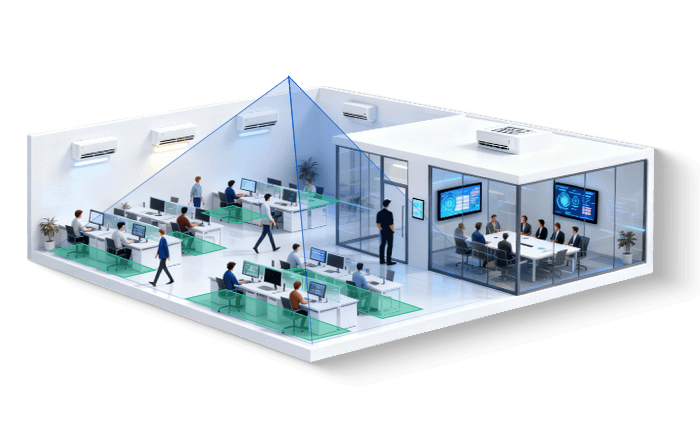
Instead of installing a sensor at every desk, a single device can monitor up to 16 desks using AI-powered detection. In larger offices, this can significantly reduce hardware requirements and simplify deployment.
It can also be used in meeting rooms as a people-counting solution. This helps teams:
- Automatically release unused rooms
- Compare booked vs actual attendance
- Identify mismatches between room size and usage
All image processing happens directly on the device, so no video or image data is stored externally.
When Desk-Level Precision Matters
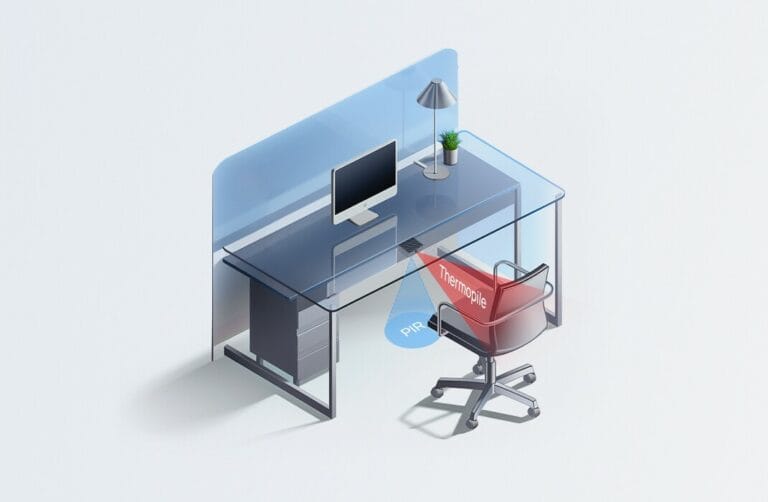
For workplaces that require more detailed visibility, TableAir also supports Milesight VS341 desk sensors.
These sensors combine motion and thermal detection to determine whether a desk is actively occupied, making them ideal for environments where precision is critical.
Built on LoRaWAN infrastructure, they’re also designed for low-power, large-scale deployments across bigger office spaces.
Combining Both Approaches
One of the biggest advantages of this integration is the ability to combine different sensor types within the same office.
For example:
- Use VS121 sensors in open areas for scalable coverage
- Use desk-level sensors where precise tracking is needed
This allows organizations to adapt their setup to how the office is actually used – not the other way around.
With better occupancy data, teams can move beyond assumptions. They can reduce ghost bookings, optimize meeting room usage, and make more informed decisions about office layouts and capacity planning.
Easier Adoption
For organizations already using Milesight devices, integration with TableAir means existing hardware can now be used for desk booking, analytics, and automation – without starting from scratch.
Existing TableAir customers can also mix Milesight sensors with current setups, creating a gradual and more cost-efficient upgrade path.
Looking Ahead
This partnership is about giving organizations more control over how they build and evolve their workplaces.
As office needs continue to change, flexible sensor infrastructure and actionable data will play a bigger role in shaping efficient, employee-friendly environments.
What other workplace automation or sensor integrations would you like to see next? Let’s talk.