
The Workplace Is Evolving: 6 Trends Shaping 2027
For years, conversations about workplace trends centered on one question: where should people work: home, the office, or somewhere in between?
That debate is fading. What matters now is simpler and more consequential: is the office worth the commute? If employees make the effort to come in, the workplace needs to offer something they can’t get at home. That’s what’s shaping the office of 2027.
These workplace trends aren’t waiting for 2027. They’re already reshaping offices today. They’re already reshaping workplaces today. Drawing on recent research from JLL, CBRE, Gensler and Microsoft, here’s where workplace strategy is heading and what organizations should prepare for next.
The Hybrid Debate Is Settled
Not long ago, every workplace conversation circled back to one question: should employees return to the office? That question has been answered. According to JLL’s Global Occupancy Planning Benchmark Report 2026, 80% of organizations now run hybrid models, and 62% require attendance on fixed days. Hybrid work isn’t a challenge to solve anymore. It’s the baseline.
The real challenge is making every office visit worthwhile. By 2027, the organizations that stand out won’t be the ones with the strictest attendance policies, but the ones that understand how their space actually gets used: utilization patterns, collaboration habits, employee experience, not just who showed up.
Understanding usage is one thing. Understanding why people choose to come in at all is the next piece.
The Office Needs a Reason to Exist
The office isn’t competing with other offices anymore. It’s competing with home.
Employees don’t commute in to answer email. They come in to brainstorm, mentor colleagues, onboard new hires, and solve problems that are easier to work through face to face. Gensler’s Global Workplace Survey 2026 found that work patterns have largely stabilized, while employees increasingly value spaces that support learning, collaboration, and social connection, and AI power users, in particular, spend more time on these activities than later adopters.
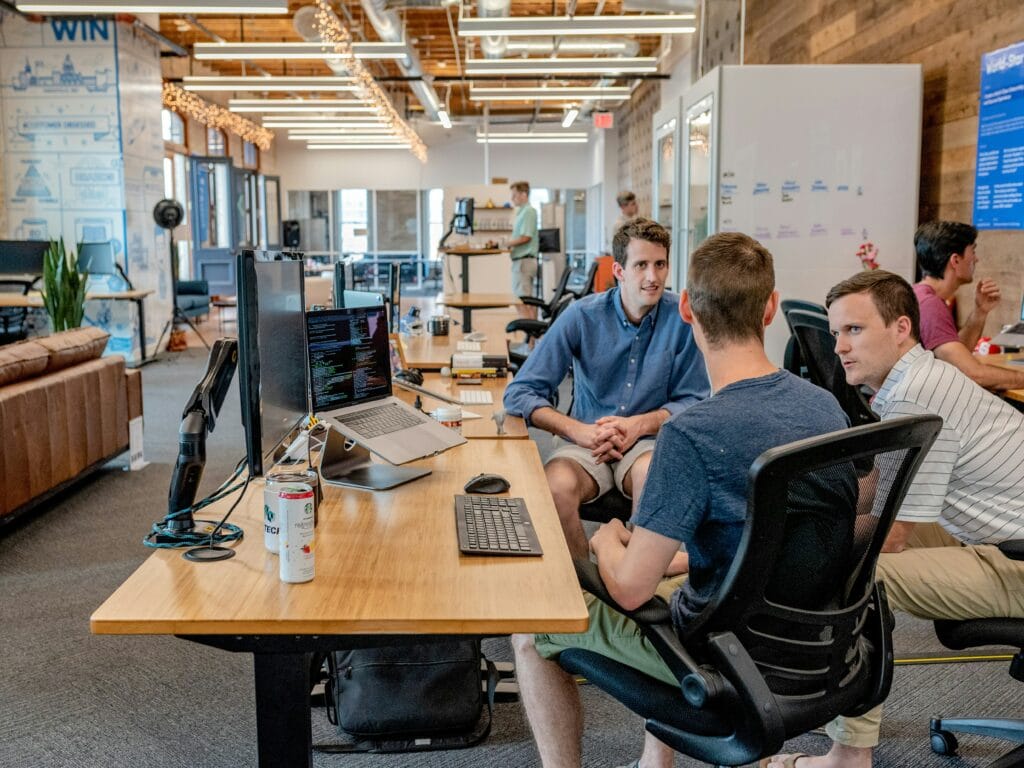
Office design is already responding: less space for assigned desks, more for collaboration areas, quiet zones, and flexible workspaces suited to different kinds of work throughout the day. The office hasn’t lost its purpose, it’s simply become the place people choose for work that’s better done together.
Once that purpose is clear, the next question is whether the space is actually delivering on it.
Data Becomes the Workplace’s New Currency
For years, workplace decisions leaned on observation and instinct. Increasingly, they’re backed by data instead.
CBRE’s 2026 Global Workplace & Occupancy Insights identifies portfolio optimization as one of corporate real estate teams’ top priorities, and doing it well requires reliable insight into how spaces actually get used. That means looking past simple occupancy rates to ask sharper questions: which collaboration areas are consistently full? Which meeting rooms are oversized for how they’re used? When does demand peak? How often do employees book desks they never sit at?
Answers to these questions help organizations refine workplace design, control real estate costs, and build spaces that reflect how people actually work. Collecting the data is the easy part; turning it into better decisions is where the value lives.
Better Data Comes Before Better AI
AI is now part of nearly every workplace conversation, but the organizations getting the most value aren’t necessarily using the most of it, they’re the ones with the best underlying data.
JLL’s benchmark report names data quality as one of the top priorities for organizations preparing for AI-driven workplace planning, and for good reason: without reliable occupancy and utilization data, AI has little to work with. Treat it as an experienced advisor rather than a decision-maker: capable of spotting patterns, forecasting demand, and recommending improvements, but only as good as the information it’s given.
By 2027, AI won’t replace workplace teams. It will help them decide faster, with more confidence.
The Best Offices Create the Least Friction
The best workplace technology is the kind employees barely notice. Nobody wants to hunt for an open desk, walk the floor looking for a free meeting room, or guess where a colleague is sitting.
The smartest offices of 2027 won’t be the ones packed with technology, they’ll be the ones with the least friction. That means desk booking that reflects real availability, meeting rooms that don’t stay blocked because someone forgot to cancel, and analytics that help teams continuously refine how space gets used. Technology’s job here isn’t to add work. It’s to remove it.
Attendance Stops Being the Main KPI
Office attendance has long stood in as the measure of workplace success. But it only tells part of the story: one office can be full while employees still struggle to collaborate; another can see fewer people on-site yet deliver a far better experience.
Organizations are starting to measure success differently: not how many people came in, but whether they found the right spaces, collaborated well, and made good use of their time. By 2027, those outcomes will carry more weight than headcount alone.
What This Means for Workplace Leaders
Preparing for 2027 isn’t about predicting what’s coming, it’s about paying attention to where things already are. Across every trend here, one theme holds: organizations are shifting from managing office space to understanding how it’s used.
In practice, that means investing in workplace analytics instead of assumptions, designing around activities rather than assigned desks, building a solid data foundation before layering on AI, and measuring success through employee experience rather than attendance alone.
Organizations that start now won’t just be ready for 2027. They’ll already be operating that way.
Looking Ahead
The office isn’t disappearing. It’s becoming more intentional.
Employees will keep choosing the office for work that’s easier, faster, or simply better done together. The organizations that succeed won’t be the ones with the biggest footprints or the strictest policies — they’ll be the ones that understand how work is changing and shape their workplaces accordingly.
That’s where the data already points.
Curious how your workplace compares? Let’s talk.